
A stained, dingy driveway can drag down your entire curb appeal. So it’s tempting to grab a pressure washer and blast it clean. But before you do, it’s worth slowing down. Because if you use the wrong pressure, technique, or cleaner, you can crack, pit, or discolor the surface permanently.
That’s why the team at Perfect Pressure Cleaning put together this guide on how to clean a concrete driveway the right way. We’ll walk through safe techniques, common stains, and the warning signs of damage so you know exactly what to do — and what to avoid. And if you’d rather leave it to the professionals, we’ll cover that option too.
Key Takeaways
- Learning how to clean a concrete driveway safely starts with using the right PSI and technique, not just more pressure.
- Different driveway materials — concrete, pavers, asphalt, brick — each need a slightly different approach.
- Oil, rust, and mold stains each require a specific treatment, not just a generic cleaner.
- Cracking, pitting, and faded stamped patterns are common signs of improper cleaning.
- Professional cleaning is often the safer, more cost-effective choice when damage risk is high.
Why Driveways Get Damaged During Cleaning
Before we get into the how-to, let’s talk about the why. Most driveway damage doesn’t come from cleaning itself. Instead, it comes from cleaning incorrectly.
- Using a PSI that’s too high for the surface
- Holding the nozzle too close, or in one spot for too long
- Choosing a cleaning solution that’s too harsh for the material
- Pressure washing over existing cracks, which then widen under force
So, once you understand these risk factors, you’re already ahead of most DIYers. Now, let’s break down exactly how to clean a concrete driveway step by step.
How to Clean a Concrete Driveway (Step-by-Step, Safely)
First, gather what you’ll need: a pressure washer set to a safe PSI (1,500–2,800 PSI is generally appropriate for concrete), a fan-tip nozzle, a concrete-safe cleaner or degreaser, and a stiff broom for pre-treatment.
Step 1 – Clear and Pre-Treat
Start by sweeping away loose debris. Then, apply your cleaner or degreaser to any visible stains and let it sit for the time recommended on the label. This loosens grime before you even turn on the pressure washer.
Step 2 – Use the Right PSI and Technique
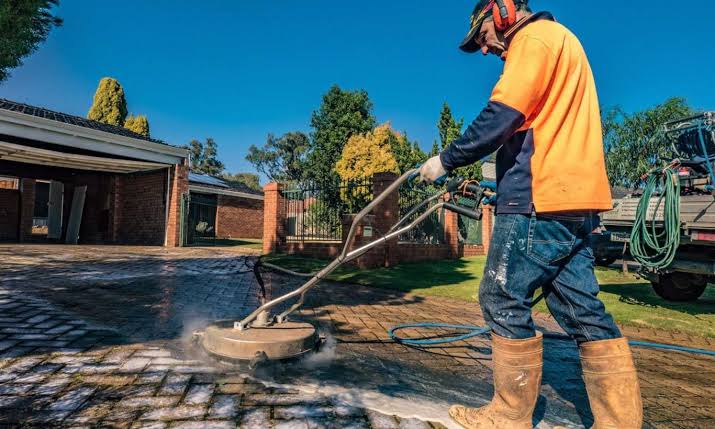
Next, keep the nozzle moving in smooth, sweeping motions. Hold it at a consistent distance — usually 12 to 18 inches from the surface — and never linger in one spot. This is where the best way to clean a driveway really comes down to technique, not brute force.
Step 3 – Rinse Thoroughly
After cleaning, rinse the entire surface to remove any leftover cleaner or loosened debris. Otherwise, residue can attract new dirt faster.
Step 4 – Let Dry, Then Consider Sealing
Finally, allow the concrete to fully dry. Afterward, this is the ideal time to apply a sealer, which protects against future staining and moisture damage.
If all of this sounds like more effort than you’d like to take on, our Driveway Cleaning Services handle the entire process for you, safely and efficiently — no rented equipment, no guesswork.
Ready for a Cleaner, Safer Driveway?
How to Clean Other Driveway Materials Without Damaging Them
Of course, not every driveway is concrete. So, here’s how the approach shifts depending on your surface.
Pavers
Use lower PSI, and be careful around joints. Otherwise, you risk blasting out the sand that holds pavers in place.
Asphalt
Asphalt is softer than concrete, which means it’s more prone to gouging. A gentler method, or a soft wash approach, is usually the safer call.
Stamped Concrete
Because stamped concrete has a decorative texture and often a protective coating, high pressure can fade or strip the pattern. Lower pressure and the right cleaner preserve the design.
Brick
Brick driveways need extra care around mortar joints, since aggressive pressure can erode the mortar over time.
Common Driveway Stains and How to Treat Them Safely
Beyond general cleaning, most driveways deal with a few recurring stain types. Here’s how to treat each one without causing damage.
Oil and grease stains: Use a degreaser designed for concrete, and avoid scrubbing too aggressively, which can wear down the surface.
Rust stains: Choose a rust remover formulated for concrete. Harsh acids can etch or discolor the surface if used incorrectly.
Mold, mildew, and algae: A soft wash approach, rather than straight high-pressure blasting, treats the growth at its source without damaging the surface.
General discoloration: Often caused by age, UV exposure, or sealant breakdown — a professional cleaning combined with resealing usually resolves this best.
Signs Your Driveway Has Already Been Damaged by Improper Cleaning
If you’ve already attempted a DIY clean, watch for these warning signs:
- Pitting or small pockmarks across the surface
- New or widened cracks after cleaning
- Faded or stripped stamped concrete patterns
- Loosened or missing paver joint sand
If you notice any of these, it may be time for a repair estimate. For a full cost breakdown, see our “How Much Does Driveway Pressure Washing Cost?“ guide.
Ready for a Cleaner, Safer Driveway?
DIY vs. Professional Driveway Cleaning
So, can you pressure wash a driveway yourself? Technically, yes. But it’s worth weighing the trade-offs first.
DIY cleaning: Lower upfront cost, but higher risk of damage if PSI, technique, or chemicals aren’t right for your surface.
Professional cleaning: Slightly higher cost, but includes proper equipment calibration, the correct cleaning solutions, and insurance against accidental damage.
In most cases, hiring a professional driveway cleaning service costs less in the long run, since it avoids the repair bills that come from a damaged surface. That’s exactly why so many homeowners across Jupiter and Palm Beach County trust Perfect Pressure Cleaning with the job.
Driveway Cleaning vs. Sealing — What's the Difference?
These two services often get confused, but they serve different purposes. Cleaning removes existing dirt, stains, and growth. Sealing, on the other hand, protects the surface from future staining and moisture damage. Ideally, you’ll pair both together as part of a regular maintenance routine.
Soft Washing vs. Pressure Washing for Driveways
For driveways with existing cracks, older concrete, or decorative finishes, soft washing is often the safer choice. It relies on lower pressure and specialized cleaning solutions instead of raw force.
Learn more in our “When to Use Soft Washing Vs Pressure Washing?“ guide.
Get a Professional Driveway Cleaning Quote
At Perfect Pressure Cleaning, we provide driveway cleaning quotes across Jupiter, West Palm Beach, Palm Beach Gardens, Stuart, and the surrounding Palm Beach County area. So, whether you have concrete, pavers, asphalt, or brick, our team knows how to clean it safely and thoroughly.
Frequently Asked Questions
Can pressure washing damage a driveway?
Yes, if the PSI is too high or the nozzle is held too close. Improper technique can cause cracking, pitting, or surface stripping. Using the correct pressure and method for your driveway material prevents this damage entirely.
What PSI is safe for cleaning a concrete driveway?
Generally, 1,500 to 2,800 PSI is safe for concrete driveways. However, older or decorative concrete may need lower pressure or a soft wash approach to avoid surface damage.
How do I get oil stains off my driveway without damaging it?
Use a concrete-safe degreaser and let it sit before rinsing. Avoid aggressive scrubbing or harsh chemicals, since these can wear down or discolor the surface over time.
Is pressure washing bad for pavers?
High pressure can dislodge the sand between paver joints. Lower PSI and careful technique help clean pavers effectively without disturbing their structural base.
How often should you clean your driveway?
Most driveways benefit from professional cleaning every 1–2 years. Homes with more shade, moisture, or heavy use may need cleaning more frequently to prevent staining and buildup.
Let Us Take the Risk Out of Driveway Cleaning
Cleaning your driveway doesn’t have to mean gambling with cracks, pitting, or a stripped finish. When you work with Perfect Pressure Cleaning, you get safe, effective results — without the DIY guesswork. Contact us today for a free quote, and let our team restore your driveway’s curb appeal the right way.